Field-proven aircraft, AI detection, modular avionics, and mission software, designed to build, launch, sense, decide, act, and adapt at the tactical edge.
One passive camera in. A live 3D battle picture out.
Patent PendingFIXAIT is more than a detector. It classifies, tracks, and geolocates airborne threats in real time, turning a single passive camera into live 3D tracks that stream straight into ATAK, the common operating picture allied forces already fight from. Raw video in, a shared targeting picture out, with nothing emitting to jam or trace.
Because FIXAIT tracks physical objects rather than radio emissions, it sees the threats RF-dependent systems were never built to catch: fibre-optic guided drones, LTE/5G-controlled platforms, and autonomous "dark drones", all on a single low-cost, low-power edge module.
At DND's IDEaS Counter-UAS 2025 Sandbox, FIXAIT took 2nd place and had its ATAK / C2 integration singled out for praise by CAF end-users. Since the 2025 Sandbox, across multiple front-line deployments, its C2 layer, operator GUI, and real-time 3D geolocation have matured well beyond what any single trial could capture.
Combat-Proven Universal Detection
Assessed in writing at the DND IDEaS Counter-UAS 2025 Sandbox by CAF operators, defence scientists, the RCMP, and allied partners. Results announced in the official DND release; the full written evaluation is available to qualified parties.
“Publishing detections, bearings, and metadata into ATAK was widely praised.”
DND IDEaS C-UAS 2025 Sandbox · written evaluation
“The AI detection model was widely regarded as mature and effective; it detected and classified multiple UAVs in a single frame.”
DND IDEaS C-UAS 2025 Sandbox · written evaluation
“A credible, effective visual C-UAS detection capability with clear operational value today.”
DND IDEaS C-UAS 2025 Sandbox · written evaluation
“Its strengths lie in ease of deployment, low operator burden, strong AI classification performance, and seamless integration with existing C2 systems.”
DND IDEaS C-UAS 2025 Sandbox · written evaluation
“Deployment was typically characterized as plug-and-play… no calibration was required, and detection began immediately once the system was running.”
DND IDEaS C-UAS 2025 Sandbox · written evaluation
“Confidence in the technology was high, and many observers expressed clear interest in further development, integration, and operational use.”
DND IDEaS C-UAS 2025 Sandbox · written evaluation
One model, every vantage and every condition: airborne, vehicle-mounted, or fixed-site, across swarms, ground vehicles, thermal, urban, forest, day and night. Real detections from real deployments.
The AI Pipeline is the engine that keeps every OBJEXIS product ahead of an evolving threat landscape: from data capture and model training to deployed C2 outputs and continuous field improvement. It turns zero-shot detections into fortified, production-ready AI models tailored to the end user's operational needs.
This is not a theoretical capability. A captured novel threat was recorded in the field, transmitted globally by satellite, processed through the pipeline, used to train a new model, redeployed, and successfully tested against the threat, in under three hours.
<3 hrs · Novel Threat to Redeployed Model
Interceptors, multirotors, hybrid VTOL, ISR and mission variants, all built from one modular stack, deployable from a backpack, and repairable in the field.
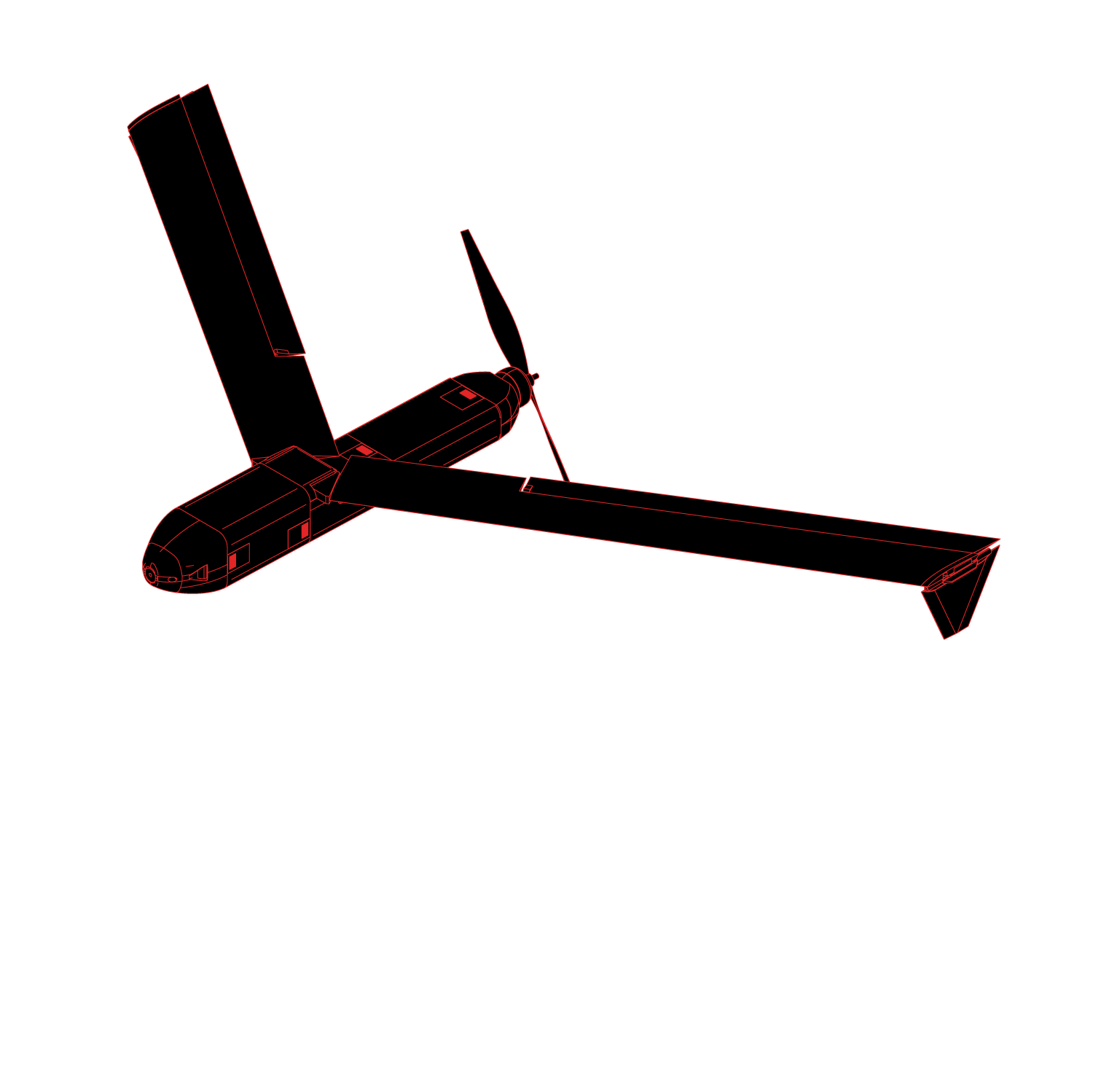
The OK-1, OBJEXIS Kinetic-1, is a fixed-wing C-UAS interceptor designed for immediate deployment by anyone, anywhere, in any conditions. A tube-launched variant makes it man-portable, neutralizing aerial threats with decisive precision.
Engineered to be low SWaP-C, the OK-1 is fire-and-forget capable, allowing operators to remain mobile and focused on the mission. It has no RF dependency to jam and is EW-silent, ensuring effectiveness even in highly contested and electromagnetically degraded environments. Hybrid and ISR variants extend the same airframe across mission profiles.
Kinetic Interception at the Edge
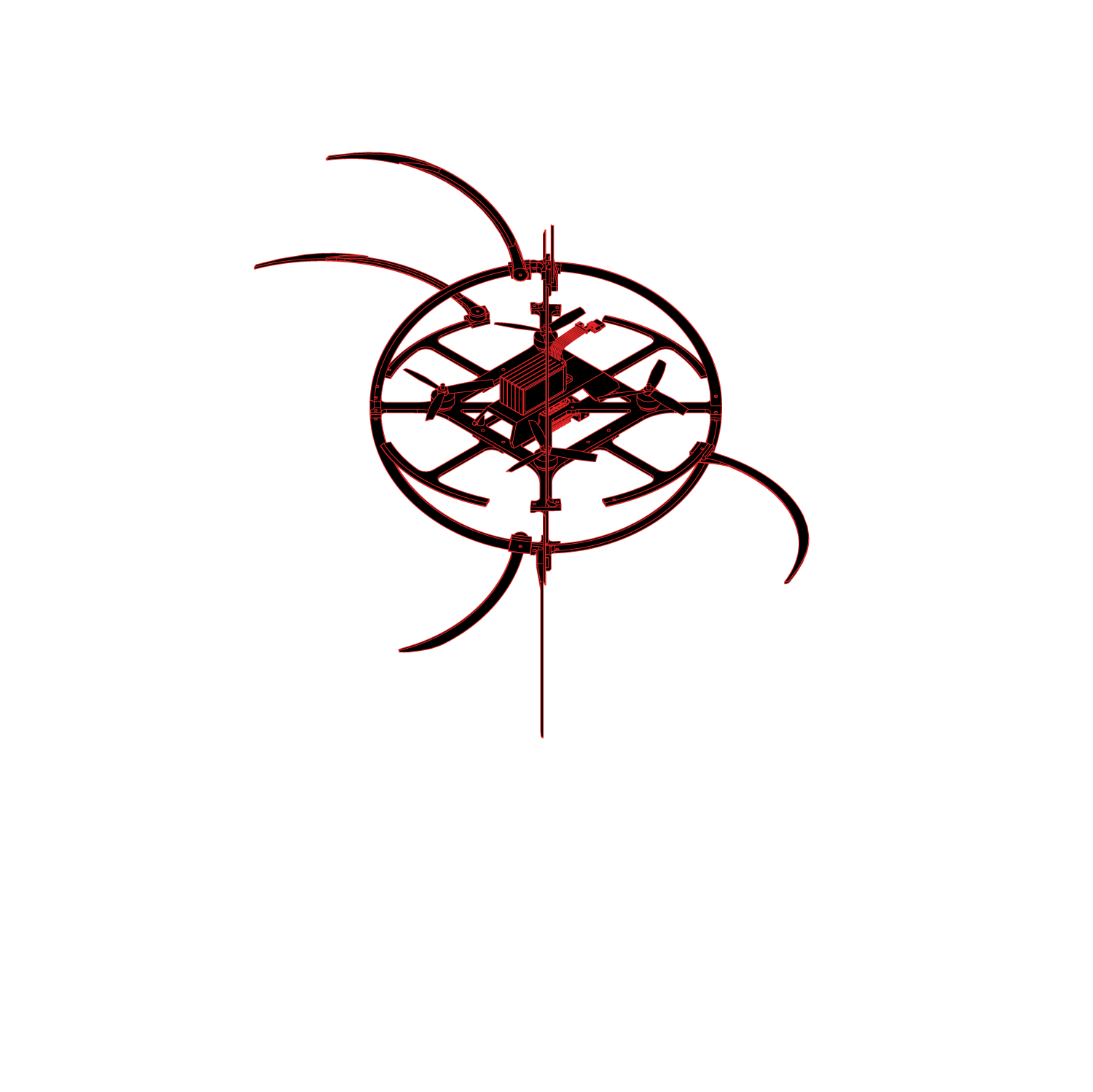
HALP, Hardened Autonomous Local Protection, is the OBJEXIS close-in defensive interceptor, designed to defend dismounted teams, vehicles, and fixed sites against drone threats at short reaction distances, where seconds matter most.
Cued by FIXAIT detection and C2 outputs, HALP closes the last layer of the defence loop: when a threat is detected and classified, HALP provides an immediate physical countermeasure. Tube-deployable and built from the shared OBJEXIS modular stack, it fields, stores, and transports like the rest of the ecosystem.
The Last Layer of Defence
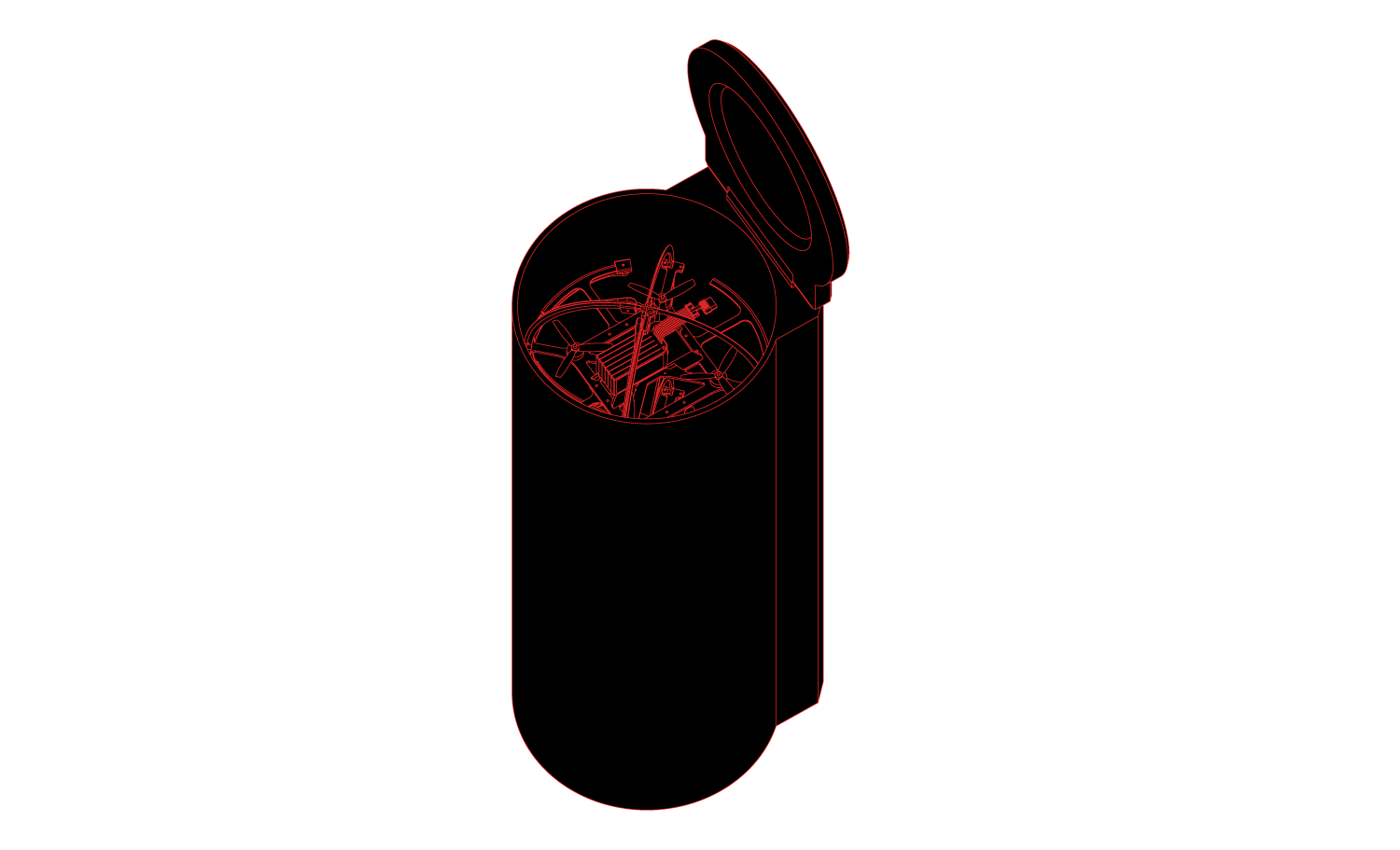
SLAAP, the Stowed Launch Autonomous Attack Projectile, is a fully self-contained interceptor built for speed and reach. Sealed and stowed until the moment of use, it can be fired from a wide range of containers, platforms, and surfaces, giving operators flexibility in how and where it deploys.
Engineered for high-speed, long-range engagements, SLAAP closes distance on threats that other systems can’t reach in time. Like every OBJEXIS platform, it draws on the shared AI targeting and sustainment stack, so a team that fields one OBJEXIS system can field them all.
Stowed. Launched. Autonomous.
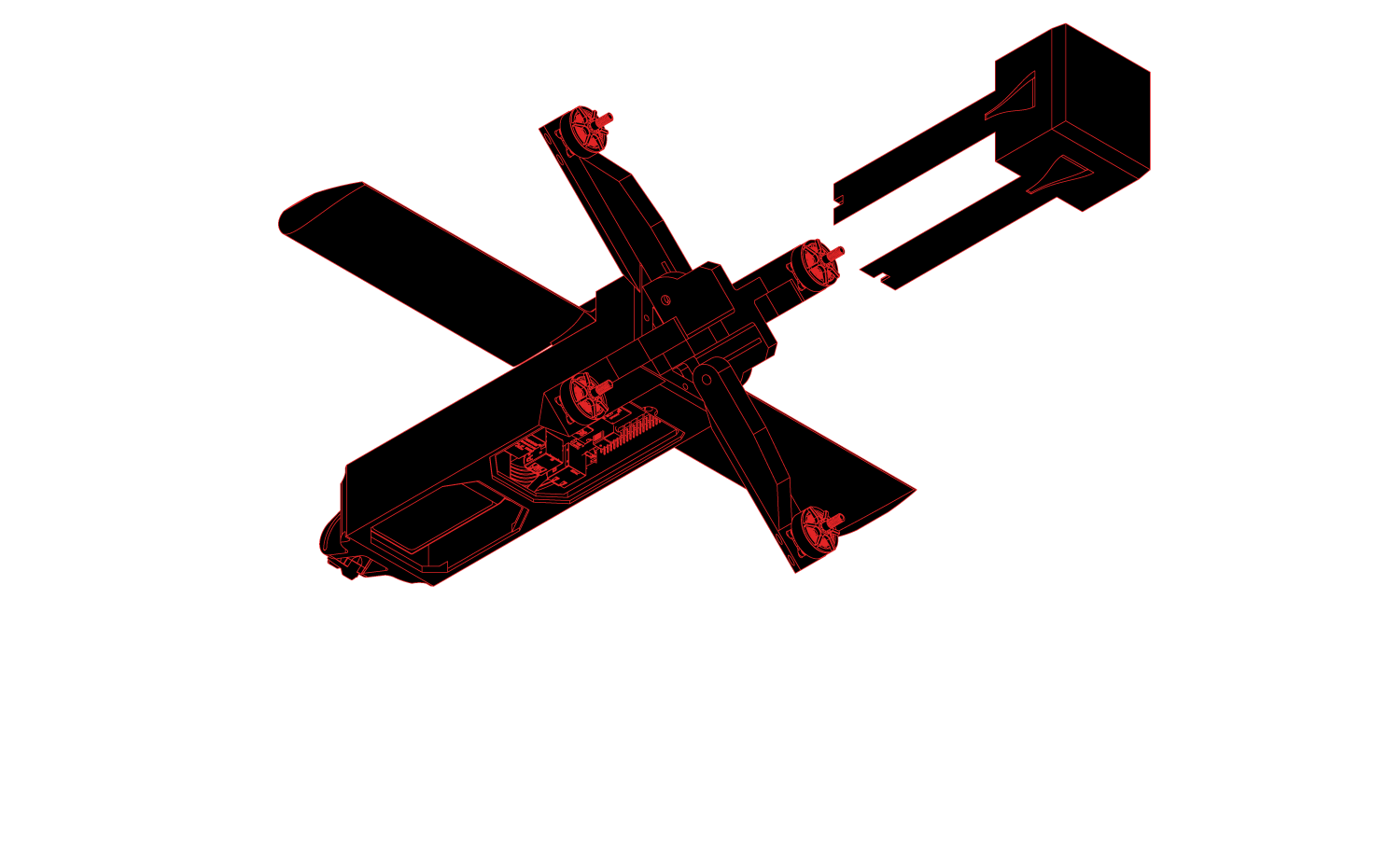
MAQ-C, the Modular Attritable Quad-Core, is a modular, field-assembled quadrotor built to be adapted, expanded, and, when the mission demands, treated as attritable. It enables the operator to meet any mission profile on demand through a flexible architecture that supports a wide range of configurations, and it has flown operationally against active targets.
Designed from the ground up for operational flexibility, MAQ-C supports commercial off-the-shelf hardware for assembly and deployment, ensuring a resilient supply chain and rapid, real-time adaptation to specific mission requirements. Field-manufacturable and 3D-printable components mean repair happens at the point of need, not at a depot.
Build Anywhere. Fly Anything.
M2E is the OBJEXIS modular avionics architecture: the nervous system connecting flight control, AI mission compute, video and payloads, and communications into one layered stack. Capability is added by module, so the same core supports everything from compact commercial aircraft to controlled defence configurations. Built in Canada, with NDAA-compliant configurations.
The brain of the aircraft. A compact, safety-critical flight controller: stabilization, sensor fusion, motor and servo control, and failsafe, able to fly standalone.
The backbone that feeds everything else. Enterprise-grade I/O, networking, protected payload power, smart battery support, and interfaces for wings, arms, and mission modules.
The eyes. Multi-camera switching, gimbal support, low-latency pilot video, clean AI sensor feeds, and operator overlays.
The judgment. Onboard AI for detection, tracking, mapping, and autonomy, isolated from flight-critical systems by design.
The voice. An OBJEXIS-controlled communications module extending the stack with secure command, telemetry, video downlink, and ground-station integration for controlled configurations.
One Stack. Manual, Assisted, and Autonomous Missions.
Autonomy is only useful if operators can direct it. The OBJEXIS operator layer turns platforms and AI into coordinated, mission-ready systems, and keeps them running in the field.
Deployable From a Backpack
Contact us to learn more, request a technical demo, or explore partnership opportunities.
Request Information